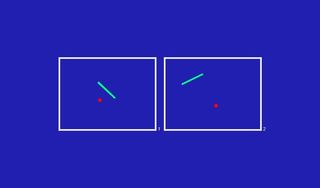
What is the FEAST attention test?
The FEAST attention test is not necessarily one single fixed module used in exactly the same way by every organization. In FEAST preparation, “attention test” usually refers to the attention-related skills that may appear in FEAST-style air traffic controller selection tasks.
FEAST, the First European Air Traffic Controller Selection Test, is a EUROCONTROL-developed test battery used by participating ANSPs, academies, universities, and aviation training organizations.
Attention matters because air traffic controller candidates may need to notice relevant information quickly, ignore distractions, monitor changing situations, and maintain concentration over time.
Attention-related preparation may include:
- visual scanning
- target detection
- selective attention
- sustained attention
- divided attention
- change detection
- distraction filtering
- speed and accuracy
- instruction precision
- error recovery
The exact format depends on the organization using FEAST. Always follow the official instructions from the ANSP, academy, university, or recruiter that invited you.
Why attention matters for ATC selection
Air traffic control is attention-intensive work.
Controllers must monitor information, identify relevant changes, detect possible risks, communicate clearly, and avoid missing important details. FEAST-style attention tasks do not require you to already know operational ATC procedures, but they can assess abilities relevant to ATC training.
Attention preparation helps train:
- noticing details
- scanning efficiently
- maintaining focus
- filtering irrelevant information
- responding to the correct target
- avoiding careless mistakes
- staying consistent under pressure
- recovering after errors
The goal is not just to be fast. The goal is to be fast and accurate.
Attention in FEAST Part 1
Attention is most naturally connected with FEAST Part 1, or FEAST I, because FEAST I is commonly associated with foundational cognitive ability testing.
FEAST Part 1 attention preparation may include:
- symbol matching
- target detection
- visual comparison
- pattern recognition
- scanning tasks
- selective attention
- sustained concentration
- instruction accuracy
Related page: FEAST Part 1
Attention in FEAST Part 2
Attention can also matter in FEAST Part 2, especially during multitasking or dynamic radar-style tasks.
In more complex tasks, you may need to:
- monitor several objects
- identify priority events
- switch attention deliberately
- avoid tunnel vision
- detect changes while applying rules
- maintain awareness under workload
- respond to relevant signals only
Related pages:
Core skill 1: visual scanning
Visual scanning is the ability to search a display quickly and accurately.
You may need to find:
- symbols
- numbers
- letters
- shapes
- differences
- alerts
- changing values
- target objects
- specific combinations
Good scanning is systematic. Poor scanning is random.
A useful habit is to scan left to right, top to bottom, or by zones, depending on the task.
Core skill 2: target detection
Target detection means identifying the correct item among distractors.
Example:
Find every ▲:
▲ ● ■ ◆ ▲ ■ ● ▲ ◆
Correct count:
3
This looks simple, but difficulty increases when displays become crowded, symbols become similar, or timing becomes strict.
Core skill 3: selective attention
Selective attention means focusing on relevant information while ignoring irrelevant information.
Example:
Count only the letter A when it appears immediately after a number.
4A BA 7A CA 2B 9A
Correct count:
3
Valid targets:
4A, 7A, 9A
This trains rule-based attention. You are not just looking for A. You are looking for A under a condition.
Core skill 4: sustained attention
Sustained attention is the ability to maintain focus over time.
Some tasks may feel repetitive. That is part of the challenge.
Sustained attention errors happen when candidates:
- lose focus
- stop checking carefully
- assume the task is easy
- become bored
- respond automatically
- miss rare targets
- rush because they want the section to end
Sustained attention is about consistency.
Core skill 5: change detection
Change detection means noticing when something changes.
This may include:
- a symbol changes
- an object moves
- a value increases
- a warning appears
- a target disappears
- a pattern shifts
- a direction changes
- a priority changes
Change detection becomes harder when several things are happening at once.
Core skill 6: distraction control
Distraction control means ignoring information that is not relevant to the task.
Distractors may be:
- similar symbols
- irrelevant colors
- nearby numbers
- moving objects
- repeated patterns
- unnecessary alerts
- visual clutter
- previous mistakes
Good attention requires knowing what to ignore.
Core skill 7: accuracy under time pressure
Attention tasks often look easy until timing is added.
Under time pressure, candidates may:
- miscount
- click too quickly
- miss conditions
- confuse similar symbols
- skip items
- select distractors
- forget the rule
The best approach is controlled speed: fast enough to keep pace, careful enough to avoid preventable errors.
Attention and memory
Attention and memory are closely connected.
If you do not attend to information correctly, you cannot remember it later.
Many memory errors begin as attention errors.
Examples:
- missing the first item in a sequence
- confusing two similar symbols
- looking at the wrong location
- failing to encode the order
- not noticing an update instruction
Related page: FEAST memory test
Attention and spatial reasoning
Spatial reasoning also depends on attention.
If you miss direction, orientation, or position details, your spatial answer may be wrong.
Attention helps you distinguish:
- left vs right
- clockwise vs counterclockwise
- rotation vs reflection
- moving toward vs moving away
- above vs below
- near vs far
Related page: FEAST spatial reasoning test
Attention and multitasking
Multitasking requires attention control.
You must decide where to focus, when to switch, what to ignore, and what to prioritize.
Weak attention can lead to:
- tunnel vision
- missed alerts
- ignored secondary tasks
- late responses
- wrong priorities
- repeated errors
Related page: FEAST multitasking test
How to prepare for FEAST attention tasks
Attention preparation should be progressive.
Use this sequence:
- Practice simple target detection.
- Practice visual scanning.
- Add similar distractors.
- Add rule conditions.
- Add timing.
- Add longer sustained-attention sets.
- Add change detection.
- Add multitasking.
- Review mistakes.
- Repeat weak areas.
Do not only practice easy target searches. Build difficulty gradually.
Step 1: practice simple target detection
Start with basic tasks.
Example:
Count every X:
X O X A B X O X
Answer:
4
This builds basic scanning discipline.
Step 2: add similar distractors
Next, add items that look similar.
Example:
Count only O, not 0:
O 0 O Q 0 O D O
Answer:
4
This trains precision.
Step 3: add conditions
Now add rules.
Example:
Count X only when it appears after a number:
3X AX 8X BX 1X
Answer:
3
Valid targets:
3X, 8X, 1X
This trains selective attention.
Step 4: add timing
Once accuracy is stable, add timing.
Use short timed rounds:
- 30 seconds
- 60 seconds
- 90 seconds
- 2 minutes
Track both speed and accuracy.
If accuracy drops sharply, reduce speed and rebuild control.
Step 5: add sustained attention
Practice longer sets.
Sustained attention drills may last several minutes and include rare targets.
The goal is to maintain the same care at the end as at the beginning.
Step 6: add change detection
Practice detecting changes in a sequence or display.
Example:
Initial: A B C D E
Updated: A B C F E
Changed item:
D changed to F
This trains noticing differences quickly.
Step 7: add multitasking
Finally, add a secondary task.
Example:
Task A: Count every X.
Task B: Press ALERT when a number is greater than 7.
This trains attention switching and divided attention.
Do not add multitasking too early. Build basic attention first.
Sample FEAST attention practice set
These examples are original practice items, not official FEAST content.
Question 1: target detection
Count every ▲.
▲ ● ▲ ■ ◆ ▲ ● ■ ▲
Answer:
4
Question 2: similar distractors
Count only the letter O, not the number 0.
O 0 Q O 0 O D O
Answer:
4
Question 3: rule condition
Count only B when it appears before a number.
B4 AB B7 CB B2 BA
Answer:
3
Valid targets:
B4, B7, B2
Question 4: change detection
Which item changed?
Original: K 7 M 2 Q
Updated: K 7 N 2 Q
Answer:
M changed to N
Question 5: selective attention
Count numbers greater than 5.
2 8 5 9 1 6 4
Answer:
3
Valid numbers:
8, 9, 6
Building a scanning rhythm
A scanning rhythm helps reduce missed details.
Depending on the task, you might scan:
- left to right
- top to bottom
- by rows
- by columns
- by zones
- by priority
- from moving objects to static objects
- from high-risk items to low-risk items
The exact rhythm depends on the task, but random scanning usually creates missed items.
Avoiding careless mistakes
Attention tasks often punish small errors.
To avoid careless mistakes:
- read the rule carefully
- identify the target before starting
- note any exceptions
- scan systematically
- avoid rushing the first items
- check similar distractors
- keep a steady pace
- recover quickly after errors
- review mistakes after practice
Careless errors are preventable only if you know why they happen.
Speed vs accuracy
Attention tests require balance.
Too slow:
- you may not complete enough items
- you may overcheck
- you may lose momentum
Too fast:
- you may select distractors
- you may misread conditions
- you may miss rare targets
- you may make repeated errors
The goal is stable accuracy at increasing speed.
How to review attention mistakes
After each practice session, ask:
- Did I misread the target?
- Did I miss a condition?
- Did I count a distractor?
- Did I scan randomly?
- Did I lose focus over time?
- Did timing make me rush?
- Did I confuse similar symbols?
- Did I forget an exception?
- Did I panic after a mistake?
- Did fatigue affect my performance?
Then practice the specific weakness.
One-week FEAST attention preparation plan
If you have one week, focus on accuracy and rhythm.
Day 1: baseline
Try target detection, visual scanning, and selective attention.
Day 2: target detection
Practice finding symbols, numbers, and letters quickly.
Day 3: similar distractors
Practice distinguishing similar-looking items.
Day 4: rule-based attention
Practice target conditions and exceptions.
Day 5: sustained attention
Practice longer sets with rare targets.
Day 6: timed mixed attention
Complete timed drills and review mistakes.
Day 7: light review
Do short, easy practice and rest.
Two-week FEAST attention preparation plan
If you have two weeks, build more gradually.
Days 1–2: baseline and fundamentals
Identify your attention error patterns.
Days 3–5: visual scanning
Practice systematic scanning and target detection.
Days 6–8: selective attention
Add conditions, exceptions, and similar distractors.
Days 9–11: sustained attention
Practice longer sets and consistency over time.
Days 12–13: timed mixed practice
Complete timed attention and multitasking drills.
Day 14: light review
Protect sleep and avoid heavy cramming.
Attention and test-day performance
On test day:
- read instructions carefully
- identify the exact target
- notice exceptions
- scan systematically
- avoid panic clicking
- keep steady pace
- do not overfocus on one item
- recover after mistakes
- protect concentration between sections
Attention is not only a skill. It is also a discipline.
Common FEAST attention mistakes
Avoid these mistakes:
- rushing simple-looking tasks
- counting distractors
- missing conditions
- ignoring exceptions
- scanning randomly
- losing focus during repetitive tasks
- practicing only untimed
- adding multitasking too early
- not reviewing mistakes
- overtraining before test day
- assuming attention tasks are easy
Simple tasks can still produce errors under pressure.
Ethical preparation
Prepare ethically.
Avoid:
- leaked FEAST attention items
- screenshots from real test sessions
- copied official content
- unauthorized question banks
- claims of exact official replication
- sharing protected test details after your session
Practice the underlying attention skills, not confidential test content.
What to verify officially
Before taking FEAST, verify:
- whether you are invited to the test
- test date
- location or online method
- required identification
- expected duration
- allowed and prohibited items
- whether official familiarization material is provided
- result communication process
- retake policy
- contact information for questions
If this guide conflicts with your ANSP, recruiter, academy, university, EUROCONTROL, or test-session instructions, follow the official source.
Bottom line
FEAST attention preparation should focus on visual scanning, target detection, selective attention, sustained attention, change detection, distraction control, and accuracy under time pressure.
Build systematic scanning habits, add timing gradually, review mistakes carefully, and avoid unauthorized content. The goal is controlled attention, not rushed guessing.
Preparation resources
Free orientation should stay realistic about what your recruiting organization actually uses. Paid catalogs vary by pathway, so match modules to your official instructions before spending money.
You may compare these catalog corners from the same publisher (none are official EUROCONTROL or employer materials): FEAST 2–oriented notes, FAA ATSA–oriented prep for cross-pathway research, and general ATC aptitude pages. Publisher: JobTestPrep.
You may also find our JobTestPrep FEAST Review helpful before buying.
Frequently asked questions
Comparing paid prep (optional)
If you want structured vendor content, you may review FEAST-style practice or EUROCONTROL-oriented FEAST prep from JobTestPrep. Always confirm which package matches your campaign before purchasing.
Is attention tested in FEAST?
Attention-related skills are commonly relevant to FEAST-style preparation, especially in cognitive ability, multitasking, and dynamic task contexts. Exact modules depend on the organization using FEAST.
What attention skills should I practice for FEAST?
Practice visual scanning, target detection, selective attention, sustained attention, change detection, and distraction control.
How can I improve attention for FEAST?
Use structured drills, scan systematically, add similar distractors, practice rule-based targets, add timing gradually, and review mistakes.
Are attention tasks easy?
They can look easy, but time pressure, distractors, conditions, and fatigue can make them difficult.
Should I focus more on speed or accuracy?
Both matter, but accuracy should come first. Build speed only after you can apply the rules correctly.
What is selective attention?
Selective attention is the ability to focus on relevant information while ignoring distractors.
What is the biggest attention mistake?
A common mistake is rushing and counting or selecting distractors because the candidate did not follow the exact rule.

