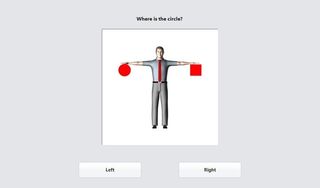
What is the FEAST reaction time test?
The FEAST reaction time test is not necessarily one fixed official module used identically by every FEAST organization. In FEAST preparation, “reaction time test” usually refers to tasks where candidates must respond quickly and accurately to visual or rule-based signals.
FEAST, the First European Air Traffic Controller Selection Test, is a EUROCONTROL-developed test battery used by participating ANSPs, academies, universities, and aviation training organizations.
Reaction time can matter because air traffic controller candidates may need to notice relevant information, decide whether action is required, and respond without unnecessary delay.
Reaction-time preparation may involve:
- visual detection
- response speed
- choice reaction
- inhibition
- rule-based responses
- attention control
- timing accuracy
- error recovery
- speed under pressure
- avoiding impulsive responses
The exact task format depends on the organization using FEAST. Always follow official instructions from the ANSP, academy, university, or recruiter that invited you.
Reaction time is not just speed
A common mistake is thinking reaction time means clicking or pressing as fast as possible.
For FEAST-style preparation, reaction time should mean controlled speed.
Good reaction performance includes:
- noticing the signal quickly
- understanding whether the signal requires action
- choosing the correct response
- avoiding false alarms
- responding at the right time
- recovering after errors
- staying accurate as timing pressure increases
Fast but wrong is not useful.
Why reaction time matters for ATC selection
Air traffic control is a time-sensitive profession.
Controllers may need to detect changes, respond to developing situations, and make decisions under pressure. FEAST-style reaction tasks do not require you to already know professional ATC procedures, but they may test cognitive traits relevant to ATC training.
Reaction-time preparation helps train:
- alertness
- visual attention
- speed of processing
- decision speed
- motor response control
- inhibition of wrong responses
- accuracy under pressure
- consistency over time
The goal is not reckless speed. The goal is fast, correct response.
Reaction time in FEAST Part 1
Reaction-time skills may be relevant to FEAST Part 1, especially in cognitive ability tasks involving visual detection, rule application, or timed responses.
FEAST Part 1 preparation may include:
- simple reaction tasks
- visual scanning
- target detection
- attention tasks
- speed and accuracy
- rule-based responding
- timed cognitive questions
Related page: FEAST Part 1
Reaction time in FEAST Part 2
Reaction time can also matter in FEAST Part 2, especially in multitasking or dynamic radar-style tasks.
In complex tasks, you may need to respond quickly while also:
- monitoring moving objects
- applying rules
- checking priorities
- avoiding tunnel vision
- managing workload
- maintaining accuracy
- recovering after mistakes
Related pages:
Core skill 1: simple reaction
Simple reaction means responding when one clear target appears.
Example:
Press when you see a green circle.
The challenge is speed and alertness.
Simple reaction practice is useful, but it is only the first layer. FEAST-style tasks may require more than a simple press.
Core skill 2: choice reaction
Choice reaction means choosing the correct response among multiple options.
Example:
Press A for a circle.
Press B for a square.
Press C for a triangle.
This is harder than simple reaction because you must identify the stimulus and select the correct response.
Choice reaction trains speed plus decision accuracy.
Core skill 3: inhibition
Inhibition means not responding when the signal does not meet the rule.
Example:
Press only when you see an even number.
Do not press for odd numbers.
Sequence:
3, 8, 5, 2, 7, 4
Correct responses:
8, 2, 4
Inhibition is important because impulsive responses create errors.
Core skill 4: rule-based reaction
Rule-based reaction tasks require you to respond quickly while applying a rule.
Example:
If the number is greater than 5, press A.
If the number is 5 or less, press B.
If the number is 0, do not press.
This trains controlled processing.
You cannot just react automatically. You must understand the rule first.
Core skill 5: visual detection
Reaction speed depends on noticing the target.
Visual detection practice may include:
- target symbols
- color changes
- moving objects
- alerts
- changing values
- rare targets
- similar distractors
- target combinations
Related page: FEAST attention test
Core skill 6: response consistency
A good reaction-time candidate is not only fast once. They are consistent.
Consistency means:
- stable response timing
- low false-alarm rate
- few missed targets
- limited fatigue decline
- steady accuracy across the session
- good recovery after mistakes
Air traffic selection tasks reward sustained performance, not one isolated fast response.
Core skill 7: error recovery
Errors happen in timed tasks.
Common reaction-time errors include:
- responding too early
- responding too late
- pressing the wrong key
- responding to a distractor
- missing the target
- freezing after an error
- overcorrecting and slowing too much
Good recovery means returning to the task immediately and protecting the next response.
Speed vs accuracy
Reaction-time preparation should always balance speed and accuracy.
If you push speed too hard, you may create:
- false alarms
- wrong-key presses
- missed rules
- impulsive clicking
- careless errors
- panic responses
If you focus only on accuracy, you may become too slow.
The goal is to gradually increase speed while keeping accuracy stable.
Reaction time and attention
Reaction-time performance depends on attention.
If you are not focused, you will respond late or miss targets. If you are too tense, you may respond too early.
Attention helps you:
- detect signals quickly
- ignore distractors
- stay ready
- maintain focus
- avoid false alarms
Related page: FEAST attention test
Reaction time and multitasking
Reaction time becomes harder during multitasking.
You may need to respond to one signal while monitoring another task.
This requires:
- attention switching
- priority control
- working memory
- response inhibition
- workload management
Related page: FEAST multitasking test
Reaction time and dynamic radar tasks
In dynamic radar-style tasks, reaction time may involve detecting a changing risk and responding at the correct moment.
You may need to avoid both:
- reacting too late
- reacting before the condition is actually met
This makes rule comprehension essential.
Related page: FEAST dynamic radar test
How to prepare for FEAST reaction-time tasks
Use progressive practice.
A good sequence:
- Practice simple reaction.
- Practice choice reaction.
- Practice inhibition.
- Practice rule-based reaction.
- Add visual distractors.
- Add timing pressure.
- Add multitasking.
- Add dynamic changes.
- Review mistakes.
- Practice consistency over longer sessions.
Do not start by trying to be maximally fast. Build accuracy first.
Step 1: practice simple reaction
Start with one target and one response.
Example:
Press when the target appears.
Measure:
- how quickly you respond
- how often you miss
- whether you respond too early
This builds basic alertness.
Step 2: practice choice reaction
Next, add multiple response options.
Example:
Circle = A
Square = B
Triangle = C
The goal is to improve fast classification.
Step 3: practice inhibition
Add “do not respond” items.
Example:
Press for green symbols.
Do not press for red symbols.
This trains restraint and prevents impulsive errors.
Step 4: practice rule-based responses
Now add rules that require interpretation.
Example:
Press A if the number is greater than 6.
Press B if the number is less than 6.
Do not press if the number is exactly 6.
This trains response control.
Step 5: add distractors
Distractors make reaction tasks more realistic.
Examples:
- similar symbols
- irrelevant numbers
- changing colors
- non-target movement
- rare targets
- misleading patterns
The goal is to respond only to the correct signal.
Step 6: add timing pressure
Once accuracy is stable, increase speed gradually.
Track both:
- average response time
- accuracy
If your error rate rises sharply, slow down and rebuild control.
Step 7: add multitasking
Finally, combine reaction-time practice with another task.
Example:
Task A: Press for target signals.
Task B: Count every X.
This trains attention switching and workload control.
Sample reaction-time practice set
These are original practice examples, not official FEAST content.
Question 1: simple reaction
Instruction:
Press when you see X.
Sequence:
A B X C D
Correct response:
Press at X.
Question 2: choice reaction
Instruction:
A = press 1
B = press 2
C = press 3
Item:
B
Correct response:
Press 2.
Question 3: inhibition
Instruction:
Press only for even numbers.
Sequence:
1 4 7 8 3 2
Correct responses:
4, 8, 2
Question 4: rule-based reaction
Instruction:
Press A for numbers greater than 5.
Press B for numbers 5 or below.
Do not press for 0.
Item:
0
Correct response:
Do not press.
Question 5: distractor control
Instruction:
Press only for the letter O, not the number 0.
Sequence:
0 O Q O 0
Correct responses:
O, O
How to review reaction-time mistakes
After practice, classify each error.
Ask:
- Did I respond too early?
- Did I respond too late?
- Did I press the wrong key?
- Did I respond to a distractor?
- Did I miss the target?
- Did I forget the rule?
- Did I panic under timing?
- Did I slow down too much after an error?
- Did fatigue reduce performance?
The cause of the mistake tells you what to practice next.
Improving controlled speed
To improve controlled speed:
- keep rules simple at first
- practice short rounds
- reduce hesitation gradually
- avoid guessing
- use consistent key mapping
- review wrong responses
- increase difficulty slowly
- rest between intense drills
- protect accuracy
- practice under realistic timing later
Speed improves best when the task rules become automatic.
Avoiding impulsive responses
Impulsive responses are a major risk.
To reduce them:
- read the rule carefully
- identify no-response conditions
- practice inhibition drills
- slow down slightly if errors rise
- do not chase speed at all costs
- review false alarms
- breathe steadily
- stay calm after mistakes
A fast false alarm can hurt performance more than a slightly slower correct response.
Reaction time and fatigue
Reaction-time performance declines with fatigue.
Fatigue may cause:
- slower responses
- missed targets
- wrong-key presses
- more false alarms
- reduced attention
- frustration
- poor recovery after errors
Do not overtrain the night before the test. Sleep is part of preparation.
One-week FEAST reaction-time preparation plan
If you have one week, focus on controlled speed.
Day 1: baseline
Try simple reaction, choice reaction, and inhibition drills.
Day 2: simple reaction
Practice fast target detection with high accuracy.
Day 3: choice reaction
Practice mapping different stimuli to different responses.
Day 4: inhibition
Practice no-response conditions and distractor control.
Day 5: rule-based reaction
Practice conditions, exceptions, and quick decisions.
Day 6: timed mixed practice
Combine reaction tasks with attention or multitasking.
Day 7: light review
Do short, easy drills and rest.
Two-week FEAST reaction-time preparation plan
If you have two weeks, build gradually.
Days 1–2: baseline and fundamentals
Identify whether your issue is speed, accuracy, or false alarms.
Days 3–5: simple and choice reaction
Build fast, correct response habits.
Days 6–8: inhibition and distractors
Practice not responding to non-targets.
Days 9–11: rule-based reaction
Practice conditions, thresholds, and exceptions.
Days 12–13: timed mixed sessions
Combine reaction tasks with attention, memory, and multitasking.
Day 14: light review
Protect sleep and avoid heavy cramming.
Common reaction-time preparation mistakes
Avoid these mistakes:
- practicing speed without accuracy
- ignoring false alarms
- using the same easy drills repeatedly
- adding complex rules too early
- practicing only simple reaction
- ignoring inhibition
- panicking after one missed target
- overtraining before test day
- confusing reaction speed with guessing
- relying on unofficial exact-copy claims
- using leaked or unauthorized content
Good preparation builds fast, correct responses.
Test-day reaction strategy
On test day:
- read response rules carefully
- identify no-response conditions
- understand key mappings
- avoid rushing before the task begins
- respond quickly but deliberately
- recover after mistakes
- maintain steady concentration
- avoid panic clicking
- follow all official instructions
The best reaction strategy is controlled readiness.
Ethical preparation
Prepare ethically.
Avoid:
- leaked FEAST reaction-time items
- screenshots from real test sessions
- copied official content
- unauthorized question banks
- claims of exact official replication
- sharing protected test details after your session
Practice reaction skills, not confidential test content.
What to verify officially
Before taking FEAST, verify:
- whether you are invited to the test
- test date
- location or online method
- required identification
- expected duration
- allowed and prohibited items
- whether official familiarization material is provided
- result communication process
- retake policy
- contact information for questions
If this guide conflicts with your ANSP, recruiter, academy, university, EUROCONTROL, or test-session instructions, follow the official source.
Bottom line
FEAST reaction time preparation should focus on controlled speed. Candidates should practice simple reaction, choice reaction, inhibition, rule-based response, visual detection, distractor control, and recovery after mistakes.
Do not chase speed at the expense of accuracy. Build correct responses first, then increase timing pressure gradually.
Preparation resources
Free orientation should stay realistic about what your recruiting organization actually uses. Paid catalogs vary by pathway, so match modules to your official instructions before spending money.
You may compare these catalog corners from the same publisher (none are official EUROCONTROL or employer materials): FEAST 2–oriented notes, FAA ATSA–oriented prep for cross-pathway research, and general ATC aptitude pages. Publisher: JobTestPrep.
You may also find our JobTestPrep FEAST Review helpful before buying.
Frequently asked questions
Comparing paid prep (optional)
If you want structured vendor content, you may review FEAST-style practice or EUROCONTROL-oriented FEAST prep from JobTestPrep. Always confirm which package matches your campaign before purchasing.
Is reaction time tested in FEAST?
Reaction-time skills can be relevant to FEAST-style preparation, especially in timed cognitive, attention, multitasking, and dynamic tasks. Exact modules depend on the organization using FEAST.
What should I practice for FEAST reaction time?
Practice simple reaction, choice reaction, inhibition, visual detection, rule-based responses, distractor control, and timed accuracy.
Is faster always better?
No. Fast wrong responses can hurt performance. Controlled speed is better than impulsive speed.
How can I improve reaction time?
Practice short timed drills, improve attention, reduce hesitation, learn rule mappings, avoid false alarms, and review mistakes.
What is inhibition in reaction-time testing?
Inhibition is the ability to avoid responding when the signal does not meet the rule.
Can reaction time improve with practice?
Yes. Response consistency, rule familiarity, attention, and controlled speed can improve with structured practice.
What is the biggest reaction-time mistake?
A common mistake is responding too quickly to distractors or non-targets because the candidate is chasing speed instead of accuracy.

